Wag! - Dog Walkers & Sitters
- 4.3
- Rating
- 1.00M
- Installs
- Free
- Price

 Analysis by App-foxy
I look at Wag! as a practical travel and local-services app for people who need help with a dog at short notice or want to arrange regular care without making several phone calls. It brings dog walking, sitting, boarding, training, and remote veterinary care into one mobile experience. That combination makes it more useful than a simple walking directory, although it also means the app has to serve very different needs at once.
In my experience, the biggest appeal is convenience. A dog owner can start with an immediate problem—an unexpectedly long workday, a trip, or a pet that needs attention while the owner is away—and then use the same service for a different kind of support later. The app is free to install, is aimed at Everyone, and comes from Wag Labs, Inc. Its presence on Android and iOS makes it accessible to a broad range of phone users, provided the device meets the required operating system level.
How the app feels during everyday use
I find the everyday experience most useful when I treat the app as a place to organize care, not as a promise that every request will be instantly covered. Before relying on it for a busy day or a trip, I’d use a low-pressure request to learn how its options fit my dog and routine. That practical approach also raises a bigger question: how much confidence should I place in a service involving both personal information and someone entering my home?
You May Also Like

 Blood Strike: 2.5 Anniversary
Blood Strike’s Loadouts Turn Every Drop Into a Tactical Gamble
A close look at Blood Strike’s custom loadouts: how fast access to signature weapons reshapes its battle royale rhythm, rewards preparation, and narrows the gap between fights.

 Pandora - Music & Podcasts
Pandora’s Music Is Easy to Start, but Harder to Recover
Pandora’s strength is its low-effort path from a seed to a station. Its weak spot is how much confidence it asks you to place in connection, setup, and quiet recovery.

 8 Ball Pool
 Is Built on Rivalries, Rematches, and Routine
A close look at the rivalries, rematches, shared routines, and unanswered safety questions that turn a quick pool match into a persistent mobile community.

 Samsung Music
’s Quiet Strength Is Playing What You Already Own
Its reach comes less from spectacle than from dependable access to a personal library. That simplicity is both the app’s strongest retention engine and its ceiling.

 AccuWeather: Weather Radar
AccuWeather Review: A Quick, Clear Forecast for Everyday Decisions
For everyday plans, the best forecast is the one you can understand quickly. AccuWeather makes rain timing, radar, and local conditions easy to act on, with a few trade-offs.

 Hill Climb Racing
Why Hill Climb Racing Still Turns Crashes Into One More Run
A tiny car, a bumpy hill and one more upgrade: Hill Climb Racing keeps resurfacing because its simple chaos makes every near-miss feel personal.
More From Our News Desk



Quick enough for planning, but the real speed depends on the request
The first thing I would tell a new user is not to confuse app speed with service speed. The screens can help you begin a request quickly, but finding a suitable person for a particular time, location, dog, and service is a separate matter. A walking request is more straightforward than arranging boarding or training, because longer or more specialized care naturally requires more thought from both sides.
That distinction matters when you are in a hurry. Imagine a meeting running late while your dog is waiting at home. Wag! is useful because it gives you a focused place to organize the request instead of searching through unrelated local listings. Still, I would not treat any on-demand care app as a guarantee that someone will appear instantly. I would prepare a backup plan for important appointments, especially if the dog has medical, behavioral, or access requirements.
For routine use, the app makes more sense when you open it before the situation becomes urgent. Setting aside a few minutes to describe the dog, explain the home routine, and think through access instructions can reduce friction later. This is one of the less obvious advantages of using a care platform repeatedly: the second request can be easier because you already understand what information matters and what details a caregiver needs.
What happens when you use it heavily
The most demanding moments are not necessarily technical. They happen when you compare several care options, adjust timing, communicate about a dog’s habits, or move between walking, sitting, boarding, training, and veterinary support. Those tasks require attention, and a small phone screen is not the best place to rush through important instructions.
I recommend treating the booking process like a handoff, not like ordering a takeaway meal. Write down the dog’s feeding routine, walking limits, triggers, medication instructions, and the location of essentials in a clear order. Even when the app makes the request simple, the quality of the result depends heavily on the information you provide. A vague note can create confusion that no fast interface can fix.
Remote vet care is another example of a feature that should be used thoughtfully. It can be convenient when you need guidance and do not immediately need to travel, but I would not use a phone-based consultation as a substitute for urgent in-person treatment. If a dog is in serious distress, the correct response is direct veterinary help rather than spending time trying to solve the situation through an app.
Stability and recovery when plans change
A care request is more sensitive than an ordinary app task because another person and an animal are involved. The experience therefore depends on more than whether the app opens. You need confidence that the request, timing, instructions, and communication remain understandable when plans change.
My advice is to review the details immediately after arranging care rather than assuming you will remember everything. Keep the important information easy to find, and check the app again before the appointment if the schedule is unusual. This is especially sensible for boarding or sitting, where a small misunderstanding about dates, food, keys, or routines can become much more serious than a missed walking preference.
If the app closes, the connection becomes unreliable, or you lose track of a screen, recovery should begin with the simplest step: reopen the request and verify what has actually been arranged before sending new instructions. Avoid creating duplicate requests merely because the first screen was slow to refresh. Duplicate bookings or repeated messages can make a stressful situation harder to untangle.
I also prefer to keep a basic offline note with the dog’s essential routine and emergency contact details. That is not a criticism unique to Wag!; it is sensible preparation for any service that depends on a phone. The app can organize the process, but it should not be the only place where you remember how your dog is cared for.
Device requirements and practical constraints
The current version is 3.112.1, and the listed minimum operating system is 11. That is not an especially demanding requirement for a modern phone, but it does matter if you are using an older device or delaying system updates. Before relying on the service for a trip, I would make sure the app installs and opens normally on the actual phone you plan to carry.
Resource use is difficult to judge from the service description alone, and I would not promise that every phone will behave identically. In normal use, the more important practical constraints are battery, connectivity, notifications, and location accuracy. A phone with very little free storage or an aggressive battery-saving mode may make any care app less comfortable to use, particularly when you are moving between screens or waiting for communication.
For travel, I would also avoid beginning a complicated booking with a nearly empty battery. Save the address and key care instructions somewhere you can access if the phone becomes unavailable. These small precautions make the service more dependable because they reduce the consequences of a device problem.
Choosing the right service instead of the fastest one
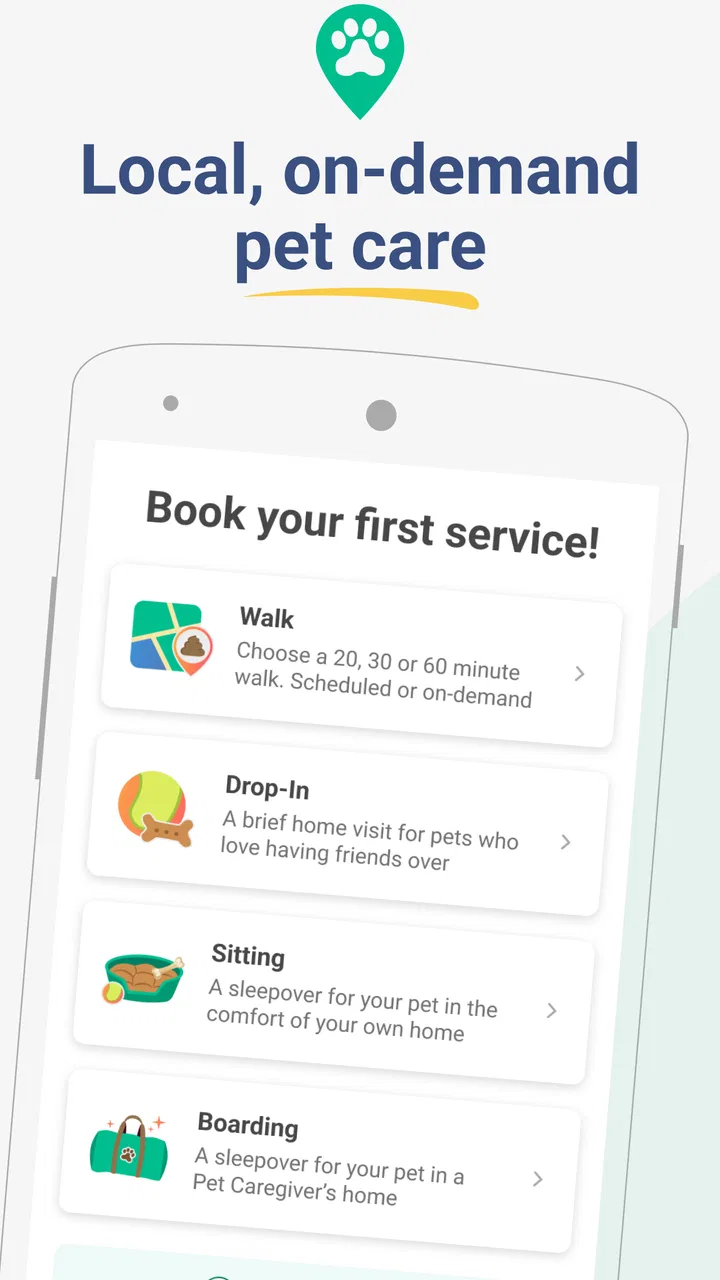
Wag! is strongest when the owner wants several kinds of dog support in one place. Walking is the obvious starting point, but sitting and boarding address longer absences, training covers behavior and skills, and remote vet care offers a different kind of help. I like that range because dog ownership rarely produces only one type of need.
At the same time, a broad menu can encourage people to make a quick choice without thinking about fit. A short walk is not interchangeable with overnight boarding. A training request should explain the behavior you want to change and the situations in which it appears. Remote veterinary care may be suitable for some questions but not for emergencies. The best result comes from matching the service to the problem rather than selecting the first available category.
One useful workflow is to separate recurring needs from exceptional ones. For a regular weekday, prepare a repeatable walking routine with consistent instructions. For travel, create a fuller handoff that covers feeding, exercise, sleeping arrangements, and contact preferences. For training, keep expectations realistic and describe the goal in observable terms, such as calmly passing another dog, rather than using a broad label like “bad behavior.”
How it compares with calling local providers
The usual alternative is to contact an individual walker, a boarding facility, a trainer, or a veterinary clinic directly. That approach can be excellent when you already have a trusted relationship. A familiar caregiver may understand your dog better than a new person, and a specialist business may offer a more focused experience than a multi-service platform.
Wag! has a different advantage: it gives owners a single starting point for several local and remote needs. That is valuable for people who have recently moved, travel often, work unpredictable hours, or do not yet have a dependable network. It can also make comparison and organization easier than keeping separate conversations across phone calls, messages, and notes.
I would choose a known local professional over a platform when continuity is the priority and the relationship is already working well. I would choose Wag! when flexibility and discovery matter more, or when I need to explore walking, sitting, boarding, training, and veterinary guidance without building a separate search process for each one. Neither option is automatically better; they solve different problems.
Who will get the most from it
This app is a good match for busy owners who occasionally need help, people arranging care in a new area, and households that want more than a simple dog-walking contact. It is also useful for owners who like having one place to begin when a need changes from a short walk to a longer sitting arrangement or a training question.
It may be less suitable for someone who already has a trusted private caregiver and never needs additional services. It is also not the ideal answer for an owner who expects the app alone to handle a complicated medical situation, a highly specialized behavioral case, or a last-minute arrangement with no room for alternatives. In those situations, direct contact with an established professional can be more appropriate.
New dog owners should be prepared to spend time explaining their pet rather than assuming the platform will infer everything. Dogs differ in temperament, energy, fears, and routines. A careful description is not unnecessary detail; it is the foundation for safer and more comfortable care.
What the public response suggests
The app has passed one million installs, with an average rating of 3.7 from around 9,400 ratings and roughly 4,800 written reviews. I read those figures as evidence of meaningful use without treating them as a guarantee. A service involving local availability and individual caregivers can feel excellent for one owner and frustrating for another, depending on timing, location, expectations, and the specific match.
The rating is also a reminder to keep expectations practical. A platform can make requesting care easier, but it cannot remove every variable from a real-world service. I would judge it by whether it helps you organize the right kind of care, communicate clearly, and recover sensibly when plans shift—not simply by how quickly the first screen loads.
My performance verdict
After looking at the complete experience, I see Wag! as a convenience-first tool rather than a replacement for personal judgment. Its strength is the range of dog-care options gathered into one app and the ability to start arranging help without searching separately for every service. The free price makes it easy to try, while the Everyone age rating keeps the product broadly approachable for households.
Its limitations are tied to the same model. Availability, suitability, communication, and the quality of the handoff still matter. The app can streamline the request, but it cannot decide whether a particular caregiver is right for a nervous dog, whether boarding is appropriate, or whether a health concern needs immediate clinical attention. Those decisions remain with the owner.
I would recommend Wag! to someone who wants flexible access to local dog walkers, sitters, boarding, training, and remote vet support, especially if their schedule changes often. I would use it proactively, keep instructions precise, check important arrangements twice, and maintain a backup for urgent situations. With that mindset, it feels like a useful organizer for modern dog ownership—most valuable when it reduces the effort of finding help without encouraging you to skip the careful decisions that make that help work.
FAQs for Wag! - Dog Walkers & Sitters
01What services does Wag! offer for pet owners?
Wag! provides a variety of services tailored for pet owners, including dog walking, pet sitting, and boarding. Additionally, the app offers training sessions and virtual vet consultations. With GPS tracking and detailed activity reports, users can stay informed about their pet's well-being and activities while they're away.
02How does Wag! ensure the safety and reliability of its walkers and sitters?
Wag! prioritizes safety by conducting thorough background checks on all walkers and sitters. The app also includes a rating and review system, allowing users to share their experiences. This transparency helps ensure that only reliable and trusted individuals are available to care for your pets.
03Can I schedule services on Wag! at the last minute?
Yes, Wag! is designed to accommodate spontaneous needs with its on-demand booking feature. Users can schedule services for the same day, making it convenient for those unexpected situations when you need a walker or sitter at short notice. Availability may vary based on location and time.
04How does GPS tracking work in the Wag! app?
The GPS tracking feature in Wag! allows pet owners to monitor their dog's walk in real-time. After each walk, users receive a detailed map showing the route taken, along with updates on bathroom breaks and any notes from the walker. This ensures peace of mind and transparency for pet owners.
05What are the payment options and pricing structure for Wag! services?
Wag! offers flexible payment options through the app, including credit cards and PayPal. Pricing varies depending on the service type, duration, and location. Users can view detailed pricing information before booking, and there are no hidden fees, making it easy to budget for your pet care needs.
Pros
- User-friendly interface for easy navigation.
- Wide network of vetted pet caregivers.
- Real-time GPS tracking of walks.
- 24/7 customer support available.
- Flexible booking options for services.
Cons
- Subscription can be expensive for regular users.
- Limited availability in rural areas.
- Occasional app crashes reported by users.
- High demand can lead to limited booking slots.
- Some users find GPS tracking inaccurate.

Wag! - Dog Walkers & Sitters
Gallery